HERE AS ME JOURNAL / CARE, WITHOUT THE GUESSWORK
Learn how to organise chest binder washing, drying and storage around the care label—and spot when it is time to ask the maker for help.
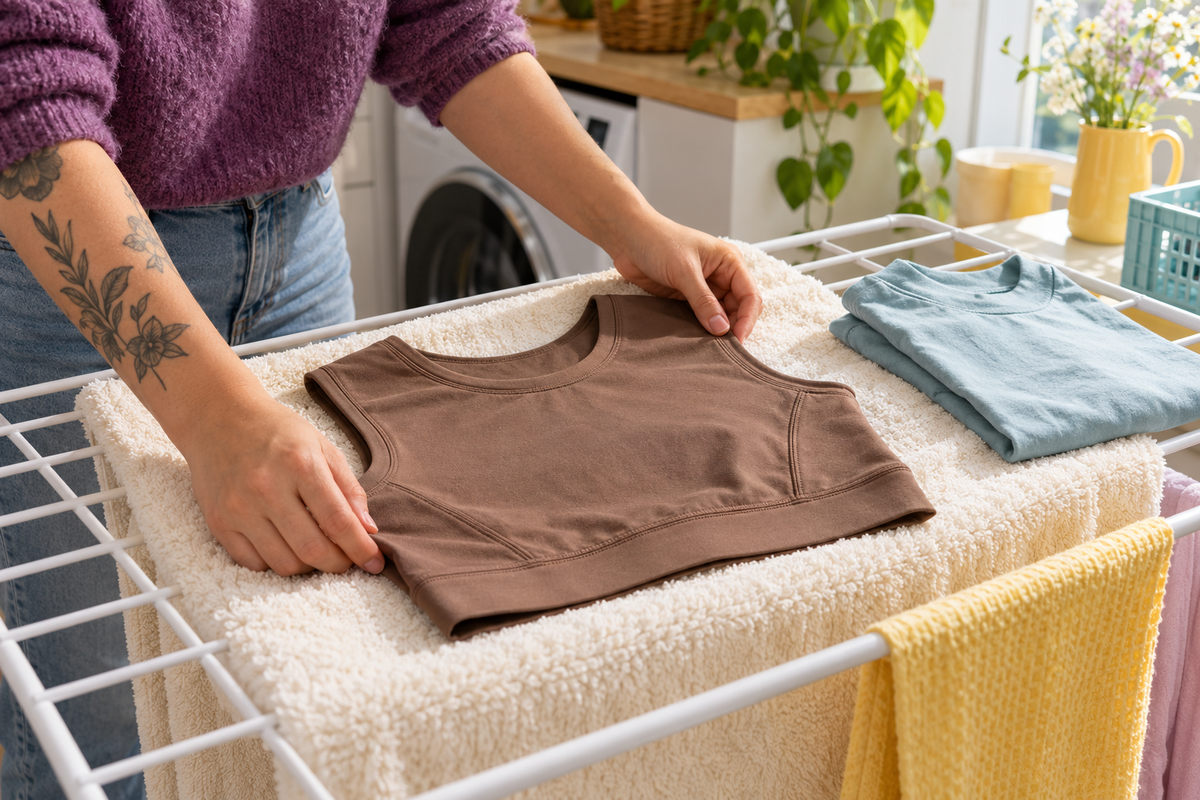
Image: original AI-generated editorial illustration. Garments and people shown are illustrative, not photographs of finished HERE AS ME products.
01 /
The care label gets the first word
If you are wondering how to wash a chest binder, start with the instructions attached to that exact garment. Binders can use different fabrics, panels, seams and closures. A routine recommended for one product should not automatically be applied to another.
Before the first wash, save a photo of the label and bookmark the maker's care page. Check any exchange conditions too: washing may affect whether a garment can be returned. If the label and website seem to disagree, ask the manufacturer which instructions apply to your version.
02 /
Make a small care card
Write down the details the label actually gives: hand or machine washing, water temperature, detergent restrictions, drying method and any instructions about closures. Leave a question mark beside missing information rather than replacing it with a social-media tip.
Keep this note with your laundry supplies or in a phone folder. It makes the routine easier to repeat and useful if someone else helps with washing. A practical message is: “Please use this garment's care instructions; do not add it to the usual dryer load.”
03 /
If the maker says hand wash
Follow the specified water temperature and detergent instructions. Use a clean washing space and give the garment room to be handled gently. Check the maker's directions for rinsing and removing excess water rather than assuming twisting or wringing is appropriate.
Spectrum Outfitters, for example, publishes a hand-washing routine for its own binders. That is a useful example of why a product-specific care page matters, not a universal recipe for every binder. The HERE AS ME editorial image shows a laundry setup; it is not a substitute for the finished garment's care label.
04 /
If machine washing is permitted
Read the details, not just the words “machine washable.” The permitted cycle, temperature, laundry bag requirements and treatment of closures may matter. Follow whatever the maker specifies and avoid treating an unspecified option as approved.
If a shared laundry room offers only settings that do not match the instructions, ask the maker for an alternative. Do not use a hotter wash or a dryer to try to tighten a garment that no longer fits as expected. A fit problem belongs with sizing or product support, not an improvised laundry experiment.
05 /
Give drying its own space in the plan
Allow time for the approved drying method before you next need the garment. If the instructions call for drying flat, set up a clean surface where it can stay undisturbed. If another method is specified, follow that instead. Avoid improvising with direct heat when it is not permitted.
A useful routine is to plan backwards: when would you like to wear it, and when can you wash it without rushing the drying stage? Your answer will depend on the garment and your home, so do not rely on a fixed drying-time promise from a general article.
06 /
Check condition before putting it away
When the garment is clean and dry, look for loose seams, damaged panels, distorted edges or closures that no longer work as intended. Note any changes and contact the maker if you are unsure whether the garment remains suitable to use. Do not attempt a structural repair that changes how it fits or applies pressure without appropriate guidance.
Store it in a clean, dry place using the maker's recommendations. Keeping the style name and purchase information with your care note can make a support conversation easier. You can describe the issue accurately without guessing which version you own.
07 /
Build a routine you can actually keep
Regular cleaning belongs in the plan for wearing a binder; the Canadian binding guide also advises following the garment's washing instructions. There is no single calendar that suits every person's use, climate and product. Check the maker's advice and give yourself enough time to clean and dry it properly.
If your budget allows another garment, rotation may make laundry planning easier, but buying more is not the only option. Plan comfortable clothing for days when the binder is being washed or dried. The routine should support you, rather than making you feel obliged to wear something because it is the only thing available.
A few things you might be wondering
Can I put a chest binder in the dryer?
Only if the instructions for that exact garment permit it. Do not use heat to try to change its size.
What if I lost the care label?
Find the maker’s current care page and identify your product version. Contact support if you cannot confirm which instructions apply.