HERE AS ME JOURNAL / THE STYLE EDIT
Compare half and full-length chest binders through coverage, clothing and practical questions—not a one-size-fits-all winner.
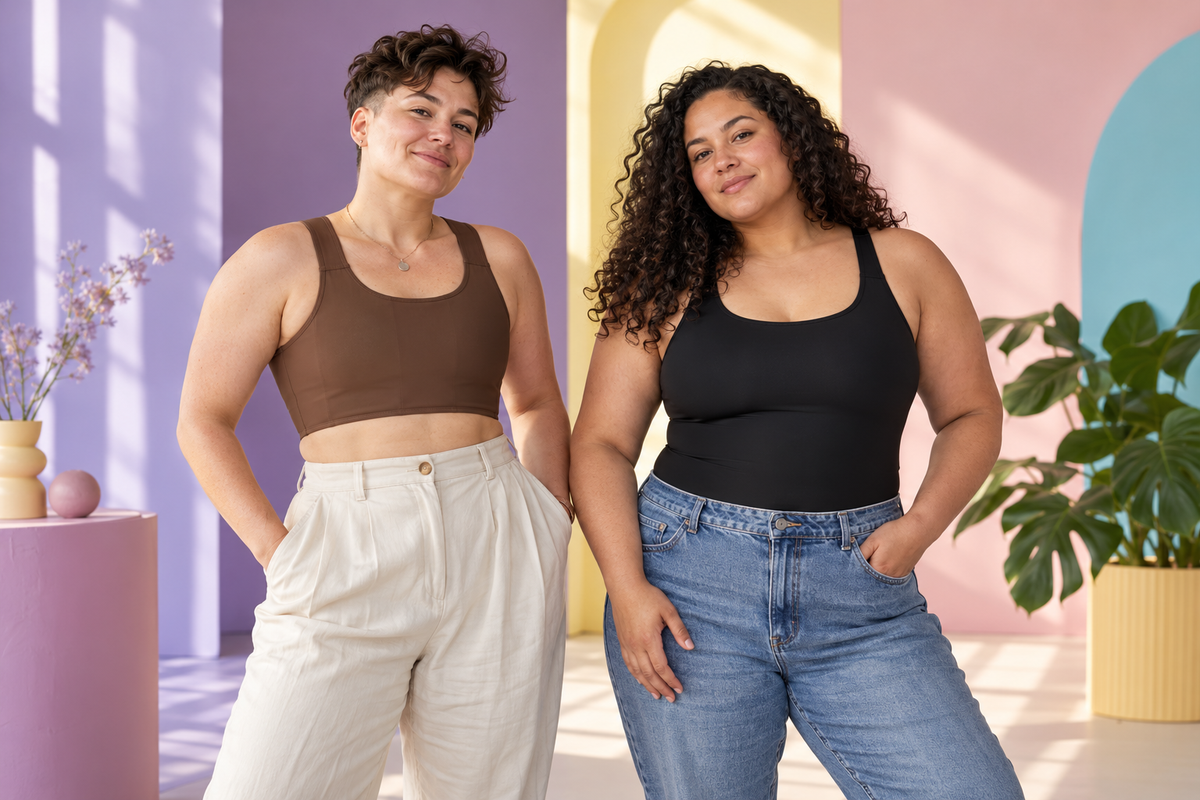
Image: original AI-generated editorial illustration. Garments and people shown are illustrative, not photographs of finished HERE AS ME products.
01 /
Start with the difference you can actually see
A half binder is a shorter garment; a full-length binder extends farther down the torso. That visible difference is useful, but it does not tell you everything about construction. The length of the outer fabric and the length of a compression panel are not necessarily the same.
If you are comparing a half binder versus a full-length chest binder, begin with the product diagrams and descriptions. Ask where the structured panel ends, what the lower portion is made from and how the maker describes the fit. Do not assume that a longer garment means stronger compression.
02 /
Think about the clothes you already reach for
Lay out three familiar outfits: perhaps a boxy T-shirt, an open shirt and a tucked-in top. Look at their necklines, armholes and waistbands. Which binder edges might be visible? Would you prefer the look of a cropped underlayer or something closer to a tank beneath them?
This is a styling exercise, not a rule about what should be hidden. A visible strap can be part of an outfit if you want it to be. If you prefer it covered, compare the actual neckline rather than choosing on length alone. A full-length garment can still have a neckline that sits differently from your favourite shirt.
03 /
Ask four useful comparison questions
First, where does the hem sit relative to the waistband of the trousers you wear most? Second, does the maker explain the fabric and panel arrangement? Third, are there clear measurements for this particular cut? Fourth, can you exchange the garment if the fit is unsuitable?
These questions work whether you are shopping for a first binder or comparing an unfamiliar style. Keep a small side-by-side note rather than relying on product names such as “classic,” “ultimate” or “everyday.” Those names may describe a brand's range but do not provide a shared technical standard.
04 /
Body shape does not select a winner for you
You may see confident claims that one length is automatically best for a larger chest or a particular torso shape. A photograph of another person cannot answer that question for you. Different patterns, panel shapes, fabrics and size ranges complicate the comparison.
Use your measurements with each style's own chart. If you have questions about coverage, ask the seller about garment dimensions and its fit guidance. Avoid translating a model's appearance into a promise about your own result. Our accompanying image illustrates two silhouettes; it is not a performance comparison or a before-and-after photograph.
05 /
Try the whole outfit, not just the mirror pose
When you have a correctly selected garment to try, follow the maker's instructions and return conditions. Wear the top you planned to pair with it and notice how the layers meet at the neck and waist. Check an ordinary seated position as well as standing. You are looking for useful information about the outfit, not trying to pass a test.
If something feels wrong, stop the try-on and seek appropriate advice rather than adjusting your body to accommodate the garment. No cut removes the need for breaks or makes sleeping in a binder appropriate. See the beginner guide for binding precautions and sources.
06 /
Choose a first experiment, not a forever uniform
One practical way to decide is to finish this sentence: “I want to try this cut because it works with ___.” The blank should name something real in your wardrobe or routine. That is a more useful starting point than chasing the style with the most dramatic product photograph.
You may eventually like different cuts for different outfits, or decide one is enough. You may also decide to wear neither on some days. Give yourself room to change your mind. The point of comparing garments is to support your choices, not to create another standard you have to meet.
A few things you might be wondering
Is a full-length binder always more compressive?
Length alone cannot answer that. Check the construction and panel information for the exact product.
Which cut is best under a T-shirt?
Compare the T-shirt’s neckline, fabric and hem with the actual binder. Your preferred coverage and the product’s fit matter more than a universal style rule.